
Regional Science and Urban Economics, 121 · 2026
Sponge City and Impermeable Housing Value: Evidence from London
A causal study of how neighborhood-scale sustainable drainage systems are capitalized into housing prices across London.
View published paper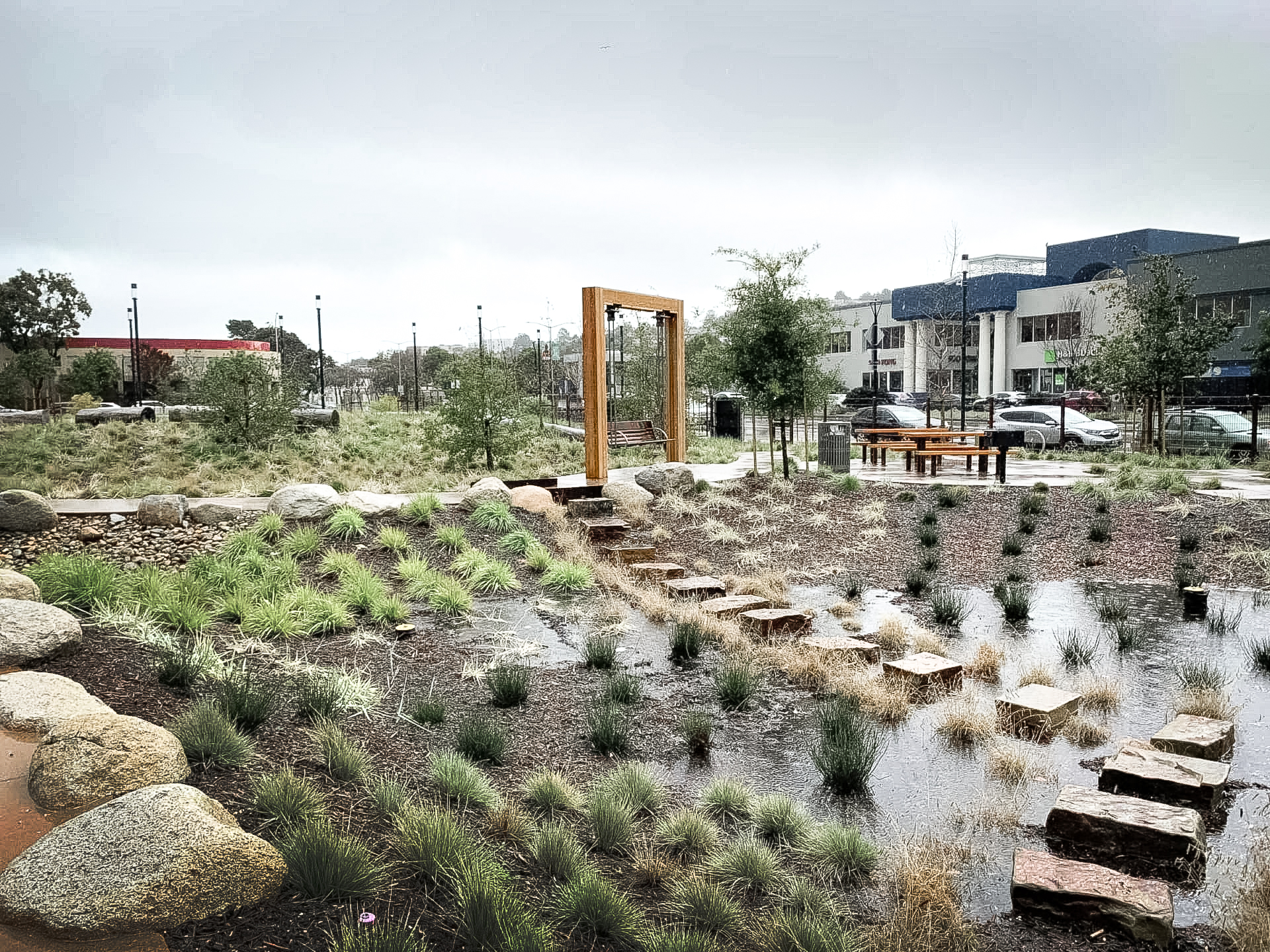
The story
When a city can no longer shed the rain
London is becoming harder for water to move through. Dense development and the loss of permeable ground place growing pressure on a drainage network designed for a smaller, less paved city. During intense rainfall, the consequences are immediate and local: streets flood, homes face new risk, and the public costs of adaptation rise.
The city’s response has been to distribute small pieces of absorbent infrastructure across neighborhoods. Rain gardens, bioswales, green roofs, permeable paving, and storage systems slow runoff close to where it lands. They are practical flood defenses, but many are also visible changes to the streets and landscapes people encounter every day.
A citywide natural experiment
Following the spread of sustainable drainage across London
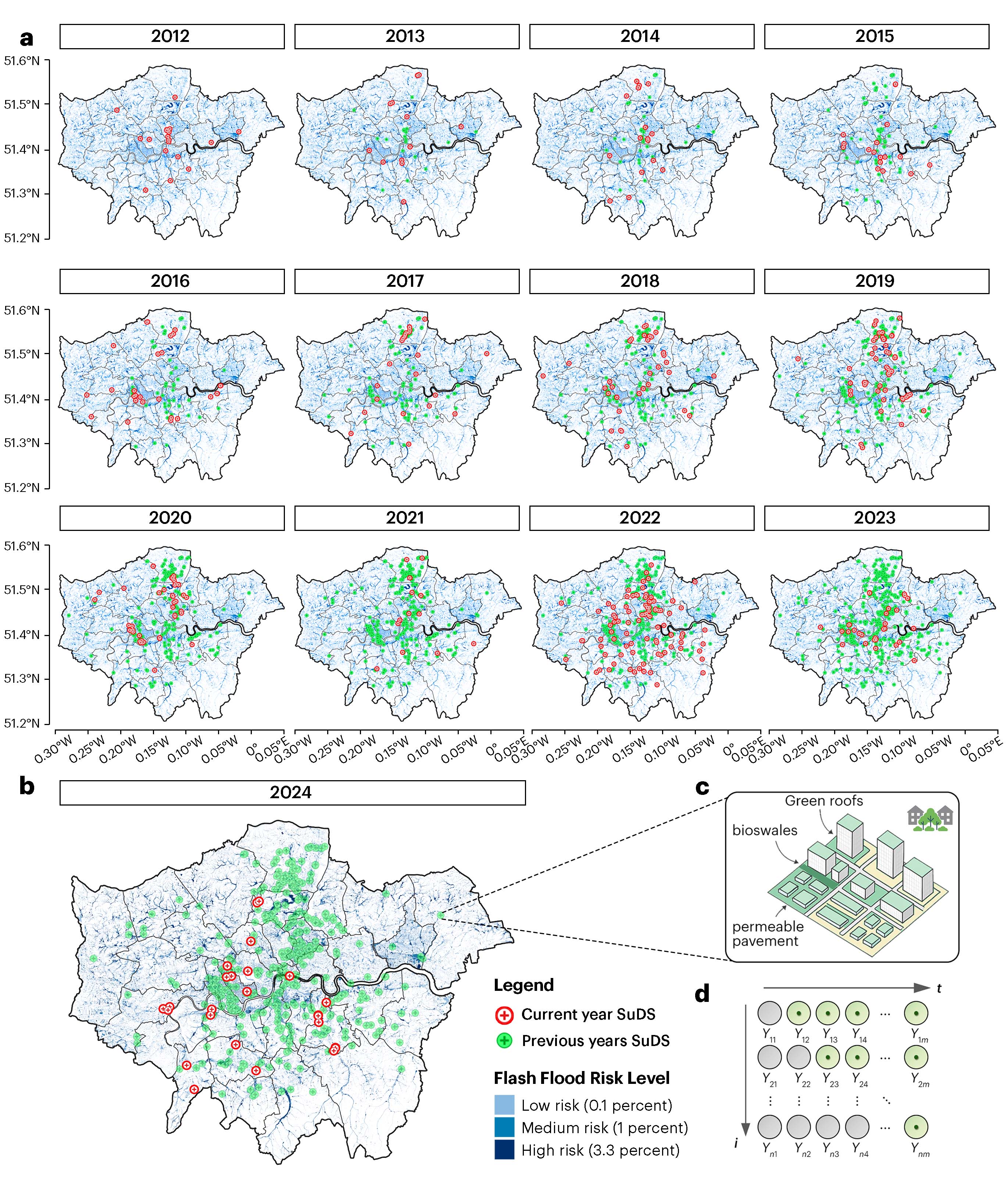
Beginning in 2012, Sustainable Drainage Systems were introduced gradually across London’s 33 local authorities. The staggered rollout created a rare opportunity to compare neighborhoods before and after installation with places that had not yet received an intervention.
The study links the annual geography of these projects to a neighborhood-by-year housing panel from 2010 to 2024. Because treated and comparison areas followed similar price trends before installation, the analysis can isolate the market response to adaptation more credibly than a simple comparison between greener and less-green places.
Research design
Approach
- A London neighborhood-by-year panel covering 2010–2024.
- Staggered difference-in-differences around sustainable drainage system installations.
- Tests of timing, spatial reach, hydraulic performance, and infrastructure visibility.
What the market revealed
Prices rose, but the number of sales did not
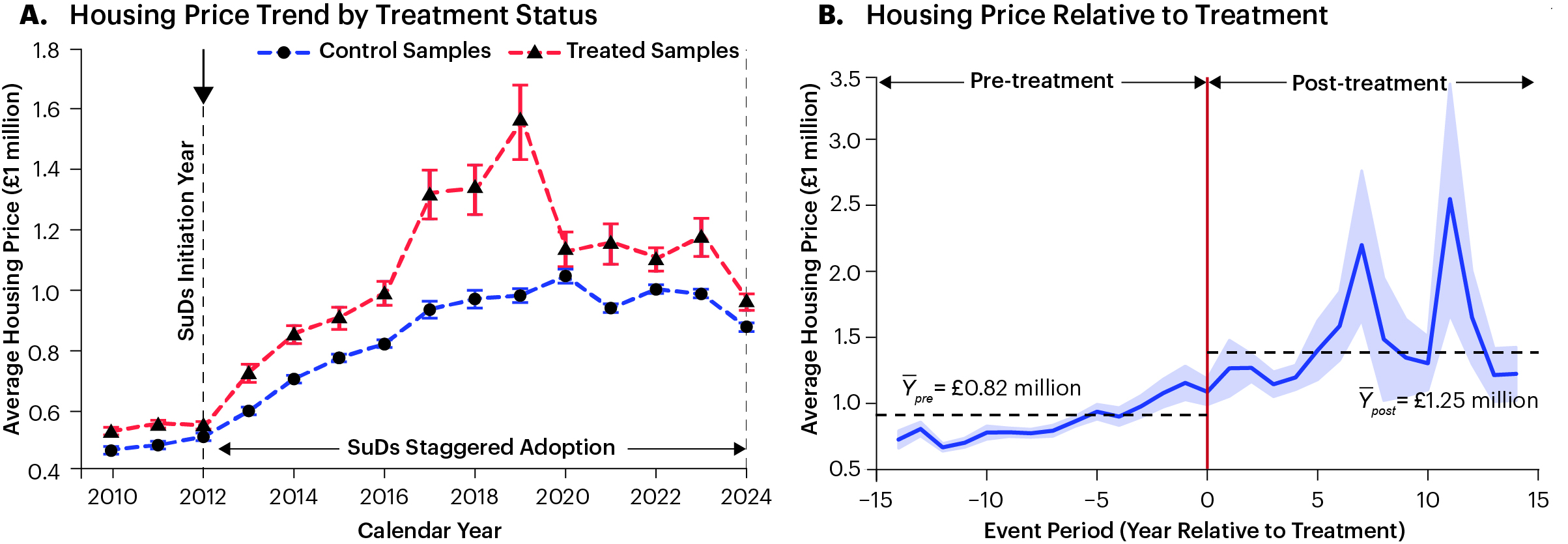
Housing prices in neighborhoods receiving green stormwater infrastructure increased by 3.2–3.7 percent on average. Transaction volumes did not measurably change, suggesting that the program altered how buyers valued existing homes rather than simply increasing market activity.
The response developed over time. Prices moved soon after installation, partially attenuated, and then peaked at roughly 7.8 percent around the fifth year before gradually declining. That arc is consistent with households learning about an intervention as it becomes established and is tested by subsequent storms.
What the evidence says
Principal findings
- Nearby housing prices rise by 3.2–3.7 percent on average, with no discernible change in transaction volume.
- The effect is hump-shaped, peaking near the fifth year before attenuating.
- Infrastructure salience explains capitalization more consistently than measured hydraulic performance.
The perception channel
Infrastructure creates more value when people can see it
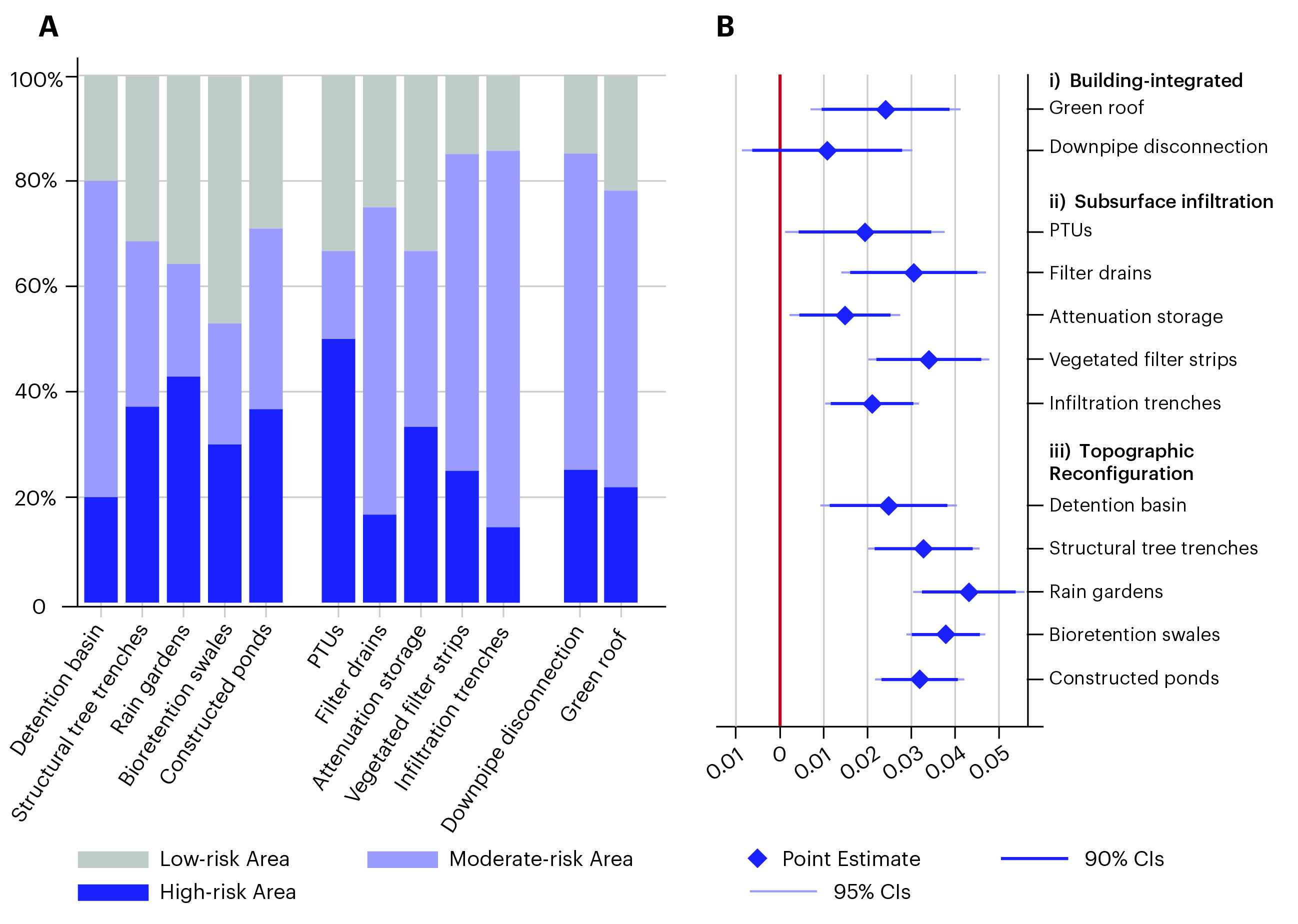
The strongest market gains do not follow a simple gradient of modeled flood risk. High- and low-risk neighborhoods both record meaningful premiums, while the response in moderate-risk areas is limited. Engineering performance alone cannot explain that pattern.
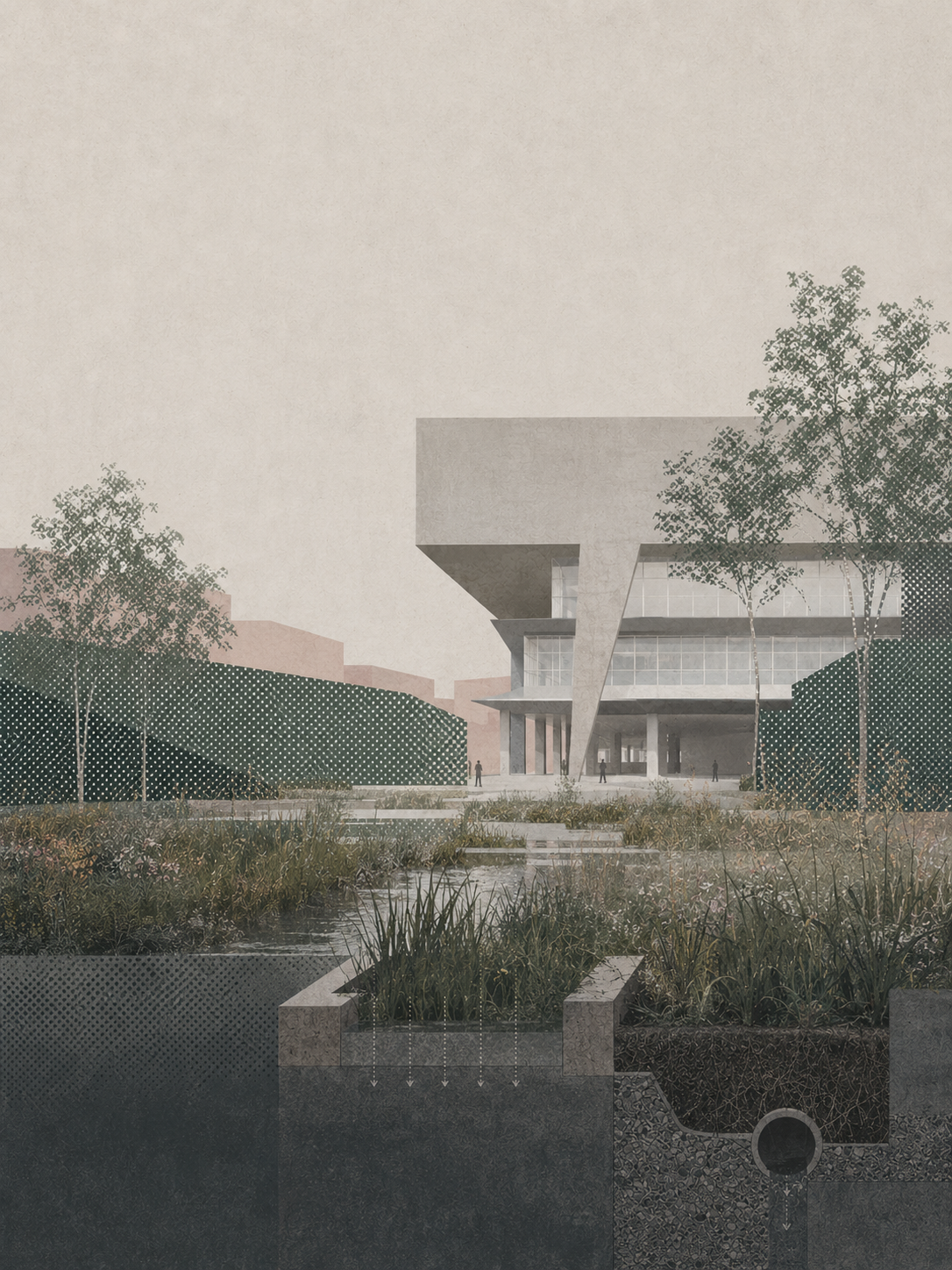
Visibility offers a stronger clue. Rain gardens, bioswales, ponds, and other streetscape-changing projects generate returns three to four times larger than equally effective systems hidden below ground or integrated into buildings. For households, adaptation is valued not only through what it does, but through whether its protection can be seen, understood, and trusted.
The policy lesson
Adaptation is both engineering and communication
The results recast green infrastructure as urban economic infrastructure. When residents can recognize and trust an intervention, part of its benefit is capitalized into surrounding land value—creating a potential basis for long-term resilience finance.
That opportunity comes with a distributional caution. Any attempt to recover costs through property taxes or local charges should protect lower-income households, so that financing adaptation does not shift its burden onto the communities it is intended to support.